“Updated Reflections on Contemporary Palestinian Documentary Filmmaking,” a panel during the industry conference of CPH:DOX in Copenhagen, drew a crowd.
Porsche Collector Magnus Walker’s Coolest Cars Can Now Be Yours
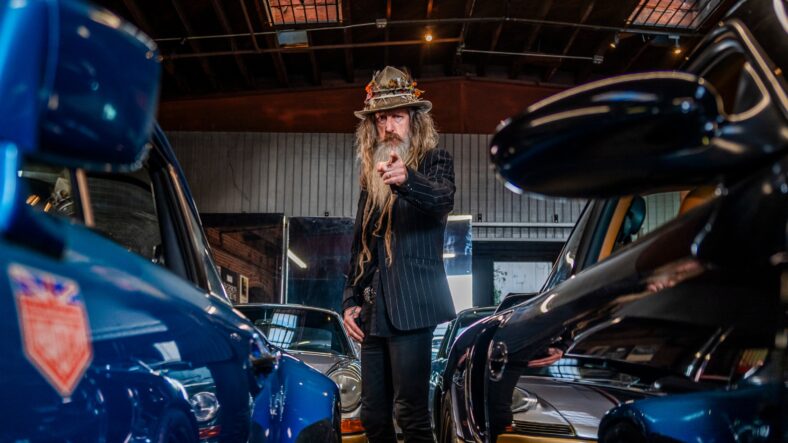
Aside from the obvious financial motivation, what compels someone to sell a multimillion-dollar cavalcade of classic, air-cooled Porsches? For Magnus Walker, the dreadlocked founder of countercultural fashion label Serious Clothing and very serious collector/designer of (mostly) 911s, it’s simple: “I’m in my less-is-more phase.” In addition to well over 100 parts, Walker is parting with 16 of his prized Porsches, each in various states of modification ranging from mechanically stock to borderline batshit in the best way possible. Below, Walker identifies five of his favorite picks from the “Outlaw Collection” of Porsches that are currently available to bid on via RM Sotheby’s through March 25.
1976 Porsche 911 Carrera 2.7 MFI ($200,000 – $250,000)
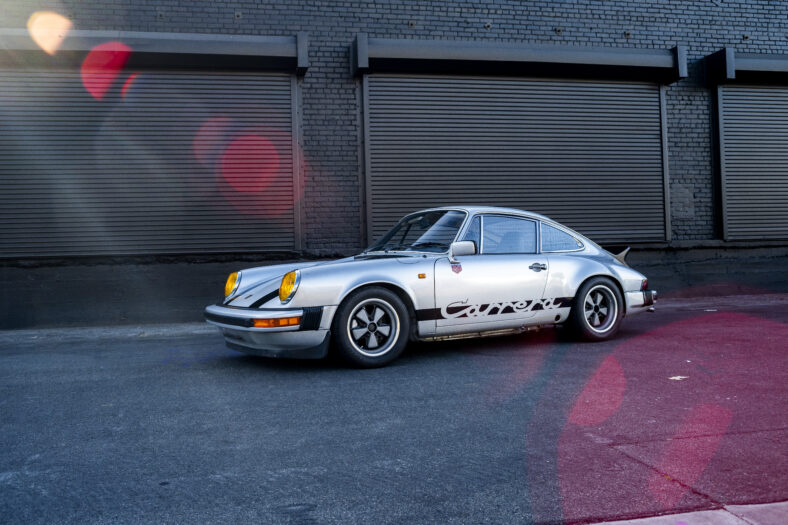
Casual enthusiasts will dig the vintage G-series body and Carrera RS-spec ducktail—Walker added the distinctive spoiler in black, which provides brilliant contrast against the “Silbermetallic” silver paint coat. But Porsche 911 superfans are liable to come flocking to this listing for its flat-six: the same Bosch mechanical fuel-injected (MFI), 210-horsepower Type 911/83 engine that made the Carrera an icon. According to RM Sotheby’s, Walker’s is one of the final 113 911s featuring the analog injection system—only Porsche’s race cars got MFI after 1976.
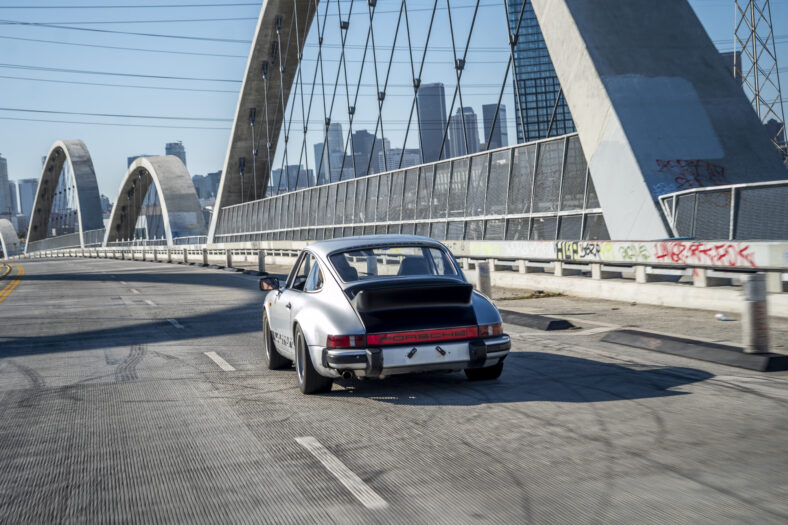
Though it’s the rarest in the “The Outlaw Collection,” Walker basically stumbled upon the car when its former owner responded to a wanted ad for a 1964 911. “I asked the guy for the VIN number and got out the Red Book, the Bible, the Holy Grail of Porsche VIN numbers, and went to the year 1976 and went down the engine numbers and serial numbers for the chassis, and I couldn’t find the VIN number,” he said.
“There was no VIN listed with a nine in the middle of it. 911 obviously is the model, six references the year, ‘76, but nine didn’t exist in this Red Book. So then I happened to go online and found a very intensive, detailed thread about a similar car where it showed that if there’s a nine in the VIN number, it represents a homologation car. Something very rare indeed. I wired him the money the same day and then picked the car up the next day.”
1976 Porsche 911 Turbo ($175,000 – $200,000)
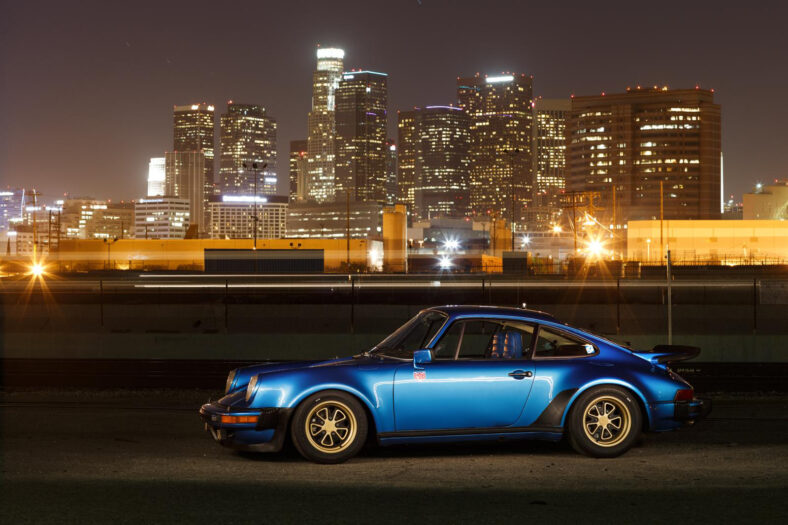
“I always sort of jokingly refer to it as my version of a Porsche Subaru. One for the Subie boys as it’s blue and gold,” Walker said of his “Outlaw-style” 1976 Porsche 911 Turbo. Also like a 17-year-old’s “custom-tuned” Subie, there isn’t another one like it, but that’s where the similarities end. Walker created the Fuchs-inspired bronze wheels in collaboration with custom outfit Fifteen52, which pop extra hard against a slightly darker variant of the Minerva Blue Metallic it wore from the factory. The ride height is dropped and the fenders were widened, while the interior features seats clad in leather and corduroy sourced from Walker’s 1978 911 “78SCHR.” This one was made for the European market, making it even more significant.
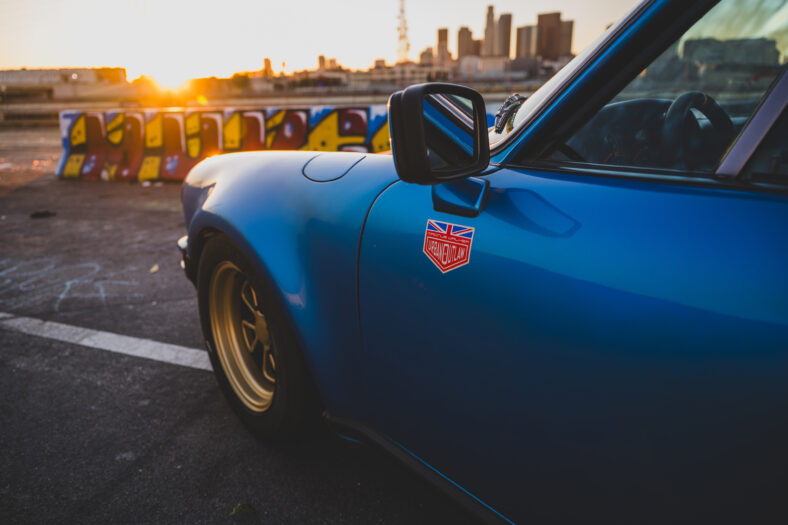
“The Euro and rest-of-world 3.0-liter 930 Turbos have a little bit more horsepower than the US cars. US-spec is 240 and the Euro/rest-of-world is 260,” Walker explains. “Same engine, same everything except a different cam profile, making slightly more power. Still the 3.0-liter, still the four speed.” While the power makes it quicker, yet another customization makes it “rowdier.”
“I had a sort of semi-custom exhaust put on it called the Hooligan exhaust made by a company called RarlyL8 in Texas,” Walker adds. “So it’s actually got a loud, raspy exhaust, with lots of turbo spool overrun hissing and whirling.”
1965 Porsche 911 ($150,000 – $200,000)
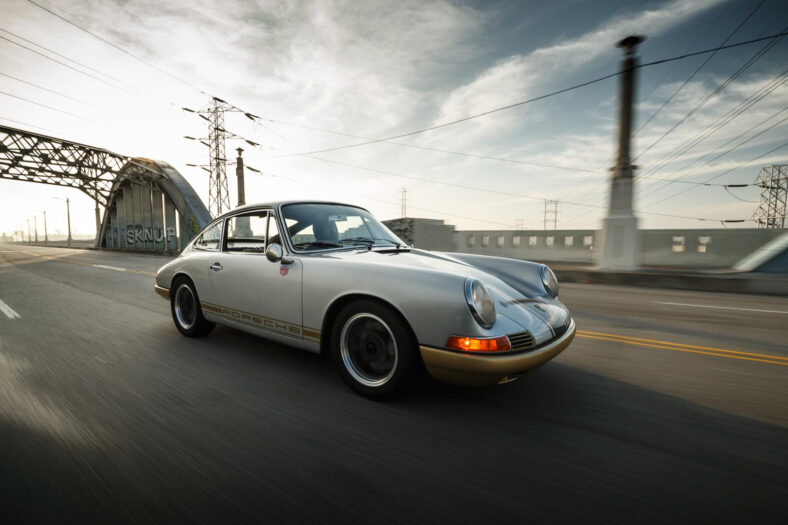
Collectors will clamor for this one: the 310th 911 ever made and one of a half-dozen imported by Brumos Porsche of Jacksonville, considered to be one of America’s premiere Porsche dealers and a four-time winner of 24 Hours of Daytona as Brumos Racing Team. As opposed to the “Outlaw” 911 Turbo’s many flourishes, the customizations seen on Walker’s version of a “Gentleman’s Racer” are relatively limited to just Fuchs wheels, vintage black Scheel bucket seats, and a slate-gray racing stripe flanked by burgundy accents.
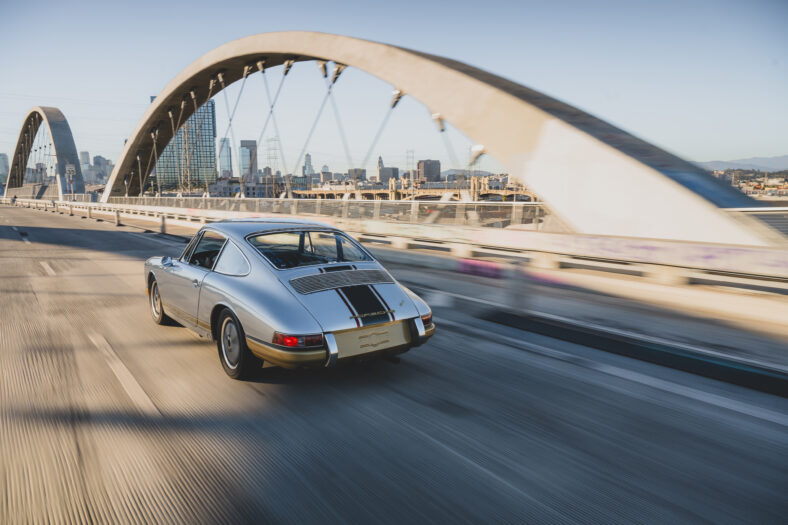
“The car was originally built in 1964 and finished in early 1965, and it’s one that I chased for quite some time,” he says. “I had to work a deal with a guy that took a lot of patience, so that was one thing I learned from this ’65 911: You’ve got to be patient when someone’s thinking of selling a car. Sometimes you get a little too keen, a little too interested, and suddenly they decide the car is not for sale…that deal took about nine months.”
1967 Porsche 911 S ($150,000 – $200,000)
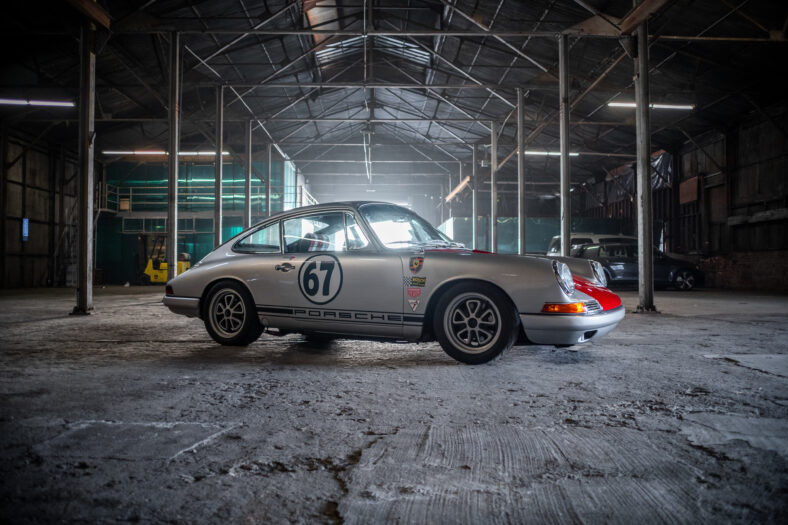
And we’re back on the mod train. However, unlike the aforementioned Porsches, this came to Walker in even crazier condition than its current state. At the time of his acquisition 20 years ago, modern, water-cooled flat sixes were all the rage, but as a die-hard collector, he was hunting for a short-wheelbase early model.
“It wasn’t actually stock, it wore turbo flares and short-wheelbase cars just don’t wear wide bodies well,” he said. “There’s something about the silhouette. It is short and narrow, not muscular and beefy. It’s like a waif as opposed to a voluptuous pinup girl. The really cool thing was that it still had its original fenders. The turbo flares had simply been welded on. I knew that because when you pull out the headlight, the front headlight bucket is stamped with the last three digits of the VIN. The numbers were there, which meant the fenders had never been removed—someone had just grafted the turbo flares onto them.”
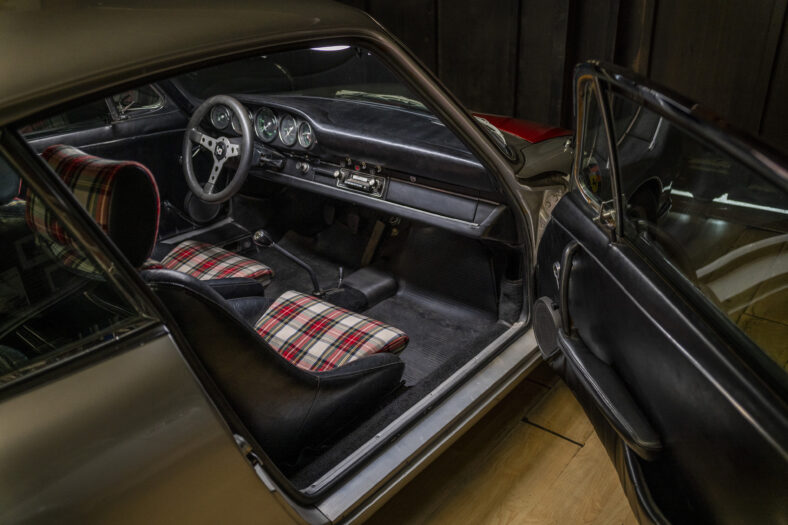
His friend, “metal master guru” Frank Turner, “de-turbo-flared” the car, restoring the original short-wheelbase arches. But Walker only deemed it a “hot rod” after discovering an even more extreme modification.
“The other thing I noticed early on was that the car felt zippier than a regular 2.0-liter ’67 S. Later, when I had some engine work done, I found out why. It was still the original, numbers-matching engine, but it was no longer a 2.0-liter—it had been punched out to a 2.3-liter,” he says. “On top of that, it is running what appear to be short-ratio ‘airport’ gears. They’re fantastic for mountain roads and tight, twisty driving, but not so great on the freeway. The result is that gears one through four keep you right in the power band and feel super lively, but there’s not much in the way of top end. It taps out at about a buck twenty, 120 mph, which, honestly, is about as fast as you’d ever want to go anyway.
2002 Porsche 911 GT2 ($125,000 – $150,000)
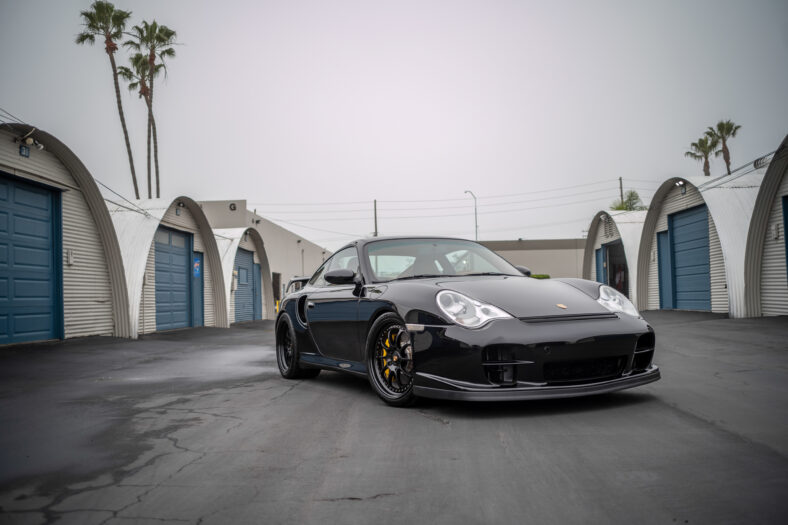
Among Walker’s most modern 911s, this second-gen GT2 debuted in 2001 as the fastest and most powerful variant yet. Its twin-turbo 3.6-liter flat-six boasted 10 percent more power compared to the 911 Turbo it bested, thanks to a higher boost limit, a larger intercooler, and a less-restrictive exhaust. This example is one of only 184 US-delivery cars for the 2002 model year and one of 1,287 produced in total worldwide from 2001 through 2005. Despite the 996-generation GT2’s aggro reputation, Walker says his mechanically unmodified example is actually approachable.
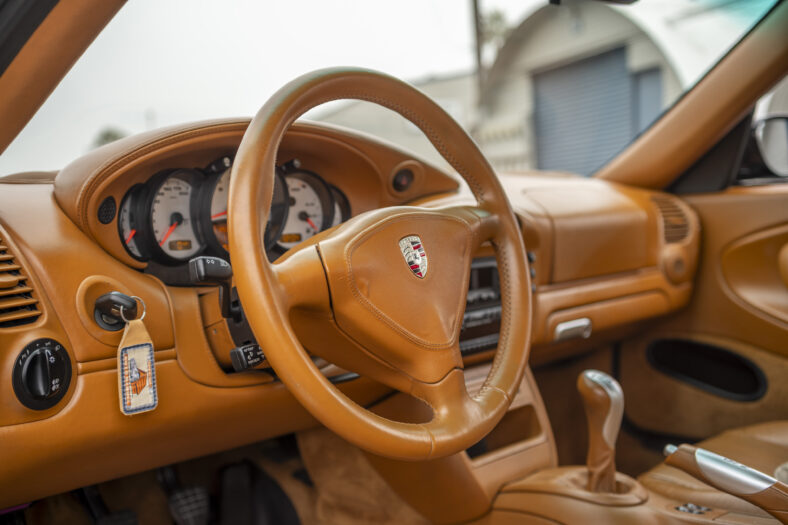
“It’s a luxurious car where you could do a thousand miles a day in it,” he says. “It’s a great GT touring car, as well as a great daily driver, because it’s not actually rowdy. It’s somewhat civilized, it’s like a wolf in sheep’s clothing; it’s a British boxer in a Savile Row suit that packs a punch.”
New York Times, Serial Launch True Crime Podcast ‘The Idiot’ (Exclusive)
The five-part podcast is based on a family member of New York Times Opinion columnist M. Gessen.
Jaskirat Singh Rangi: The URI–Dhurandhar Connection Fans Can’t Ignore
Sometimes, the most interesting stories in cinema are not the ones that are told loudly on screen, but the ones that quietly sit in the background, waiting for someone to notice. Back in URI: The Surgical Strike, there is a small, almost fleeting moment. Flight Lieutenant Seerat Kaur, Indian Air Force, played by Kirti Kulhari, is asked a simple question by Major Vihaan Singh Shergill, Para SF (Vicky Kaushal). Does she have anyone in her family in the armed forces. She replies with calm restraint, “It was my husband… Captain Jaskirat Singh Rangi, Season Punjab Regiment.”
It is a line that passes quickly. No flashback. No elaboration. Just a quiet pause that suggests loss. At that moment, the audience assumes what the word “was” usually implies in war stories. That he is no more. And the film moves on.
But cinema has a strange way of circling back.
Now, with the growing chatter around Dhurandhar & Dhurandhar: The Revenge, the same name has started to echo again. Ranveer Singh’s character, known as Hamza Ali Mazari, is being closely linked to that very same name. Jaskirat Singh Rangi. Same identity. Same regiment. But a completely different life, (a different face), and possibly a very different truth.
And that is where things stop being straightforward.
Because, if this is indeed the same man, then the meaning of that one word, “was”, begins to change. What if it did not mean death. What if it meant disappearance. What if Captain Jaskirat Singh Rangi did not die, but instead vanished into something far more complicated. Something that forced him to leave behind not just his name, but his entire identity.
The possibility opens up a story that feels bigger than both films. A soldier who was once part of the Indian Army, now living as someone else. A husband who is remembered as lost, but may still be alive somewhere, carrying a past he cannot return to. And a woman who believes her story has ended, unaware that it may not have.
Of course, there is another way to look at it. Maybe this is just a coincidence. Maybe the name was simply reused because it sounds real, rooted, and authentic to a Punjab Regiment officer. Hindi cinema has done that before. Not every detail is a clue, and not every connection is intentional.
But then again, this does not feel like just any name.
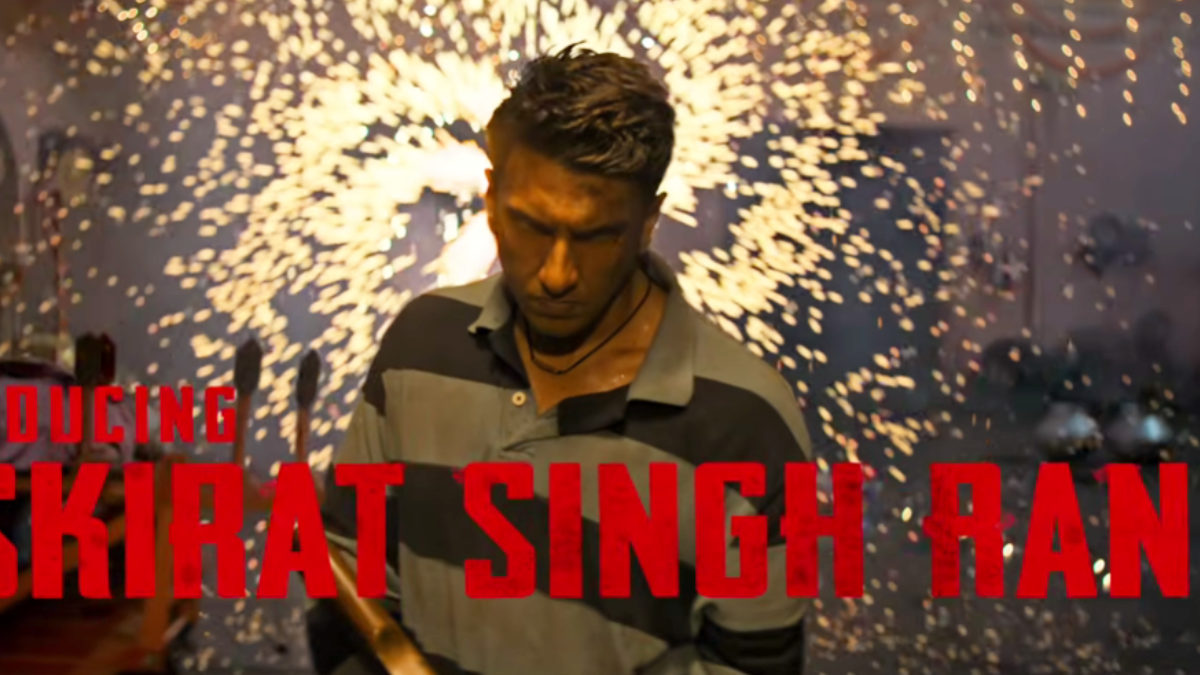
“Jaskirat Singh Rangi” is not generic. It carries a certain specificity, a texture that writers usually do not repeat casually, especially within the same broad storytelling space of military dramas. And when you place that against the backdrop of a character like Hamza Ali Mazari, someone who already seems layered, conflicted, and possibly hiding more than he reveals, the overlap starts to feel less accidental and more deliberate.
There is also the question of time. In URI, Jaskirat is already a Captain. In Dhurandhar: The Revenge, from what we understand so far, his journey seems to begin much earlier, possibly even during his training days. That creates a gap, but not necessarily a contradiction. In fact, it could be the opposite. It could mean that one story is showing us the beginning, while the other quietly referenced the end, without us even realising it.
If that is true, then what we are looking at is not just a character, but a timeline that has been scattered across films. A life that started with promise, went through something unimaginable, and ended up becoming something or someone else entirely.
And suddenly, that one line from URI does not feel like background detail anymore. It feels like a breadcrumb. Something placed carefully, waiting for a future story to pick it up.
Whether this connection is real or not is something only time, and the makers, will confirm. But maybe that is not even the point. Because the fun of cinema, especially for those who love it a little too deeply, lies in these possibilities. In connecting dots that may or may not exist. In imagining stories that live between the lines.
And right now, this is one of those stories.
Because if Captain Jaskirat Singh Rangi and Hamza Ali Mazari are indeed the same man, then somewhere out there is a love story left unfinished, a soldier’s journey left untold, and a truth that could change the way we look at both films forever.
And if they are not, then it is still one of those coincidences that feels just a little too perfect to ignore.
Either way, it leaves you with a question that is hard to shake off.
Was he really gone, or did we just stop looking.
Apple Upgrades Its Over-Ear Headphones With AirPods Max 2
When Apple originally introduced the AirPods Max over-ear headphones, audiophiles were taken with their excellent sound quality, easy connectivity and overall style. Now, after years without any true upgrade, Apple has graced their premium set of cans with an overhaul that adds a new powerful chip that unlocks improvements to active noise cancellation, audio quality and a host of new smart features while retaining their sleek good looks.

Packing the H2 chip, the AirPods Max 2 now boast enhancements to both ANC and sound quality, making for an even more immersive experience. According to Eric Treski, Apple’s director of Audio Product Marketing, “The sound quality is remarkably clean, rich, and acoustically detailed — and when combined with capabilities like Personalized Spatial Audio, AirPods Max 2 deliver a profoundly immersive experience.” Hands-on testing is the only way to tell if the new headphones deliver on these claims but Apple’s pedigree in the space, specifically the in-ear AirPods Pro line, have never failed to one up their predecessors.
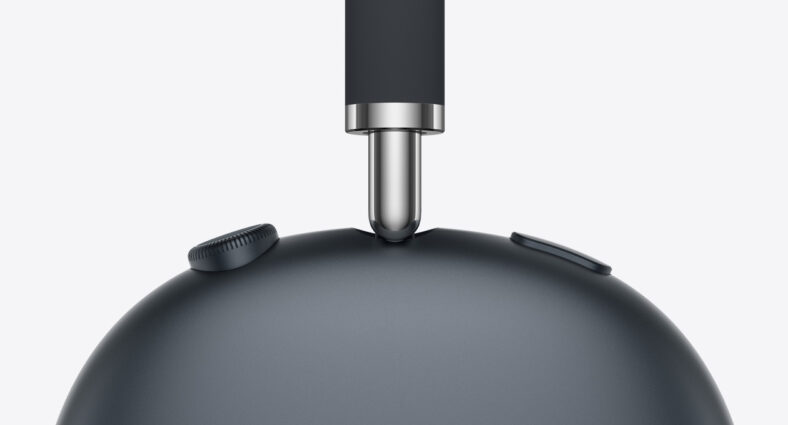
Apple has rarely let a new product turn up without imbuing it with at least a little magic. For the AirPods Max 2, that magic is taking the form of new smart features that ratchet up the capabilities of these headphones, taking them from go-to accessory to must-have companion. This time that means Live Translation, a slew of dynamic and automatic audio adjustments based on environmental changes and personal preferences and, perhaps most interestingly, a new camera remote control mapped to the digital crown aimed at content creators that will take a photo or start/stop video recording when connected to an iPhone or iPad.

With so many changes under the hood, it’s nice to see that Apple has wisely not changed the form-factor, finish or color options in the jump to the AirPods Max 2. Priced at $549 and coming in the understated midnight, starlight, orange purple and blue, the AirPods Max 2 are available for pre-order on March 25 and will reach customers in “early April,” according to Apple.
Kevin Spacey Settles With Sexual Assault Accusers Before London Trial
The Oscar-winning actor has continuously denied all of the allegations made against him.
John Wilson on His “Mr. Magoo-, Mr. Bean-Type Character,” His Doc on “Unsexy” Concrete and Hoping to Pitch a New TV Series
The HBO cult icon shared how Street photography inspired him and why “I really don’t like manipulating the image” during an on-stage interview at the industry conference of CPH:DOX in Copenhagen.
This Breitling Navitimer Chronograph Honors The Concorde’s High-Flying Heritage
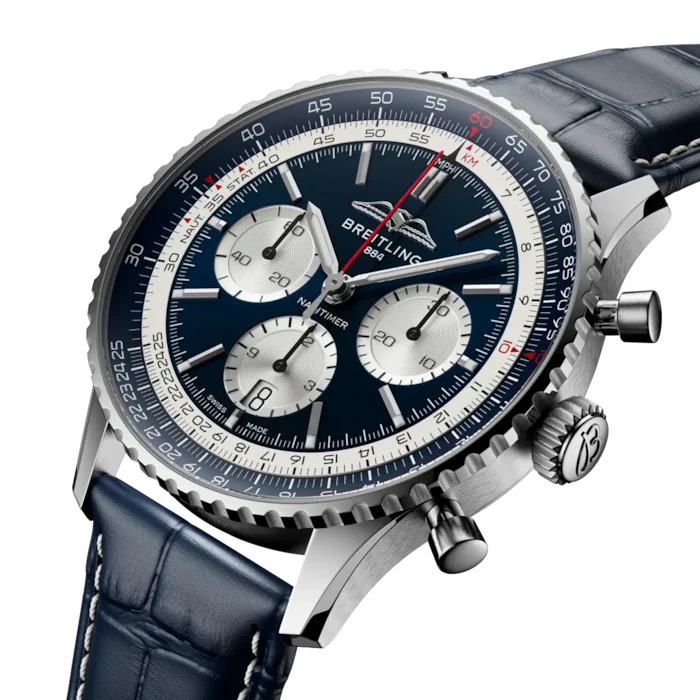
Perhaps the most legendary commercial aircraft to ever take to the skies demands a watch rooted in similar performance, and a new Breitling Navitimer B01 Chronograph is as fitting an homage as any to the iconic Concorde skyliner.
Developed to celebrate five decades since the Concorde first graced the skies, cruising 60,000 feet at twice the speed of sound, the newest Breitling Navitimer B01 Chronograph is positively packed with nods to both the civil aviation heritage of the timepiece and the boundary-pushing aircraft itself.

The latest Navitimer Chronograph is limited to just 593 editions in a fitting nod to the Olympus 593 turbojet engines propelling the plane and its 100 very lucky passengers on speedy Transatlantic flights. The blue dial of the Navitimer Chrono was designed in a nod to the stratosphere as seen from the legendary commercial plane, while a series of caseback engravings (including “Tribute to Concorde,” “Jetliner,” and “Mach 2″) grace the limited-edition watch.

Breitling notes that collectors regularly list the Navitimer among its most collectible watches of all-time, a worthy honor given the real-world aviation specs of the silhouette in the decades following its 1952 release. The watch was largely billed as the first aviation-ready wristwatch computer, complete with a circular slide rule for onboard calculations.
Of the partnership, Breitling sought to capture the pioneering spirit of the Concorde, this time in refined yet highly functional timepiece form. “Fifty years after the Concorde’s first flight, it honors an aircraft that redefined what was possible and a belief that the future belongs to those who dream bigger,” Breitling said.

Watchmaker CEO Georges Kern noted the five-decade milestone since the Concorde first took to the skies helped pave the way for future aviation innovation, and a proper Navitimer Chronograph was a fitting tribute. ““Flying with the Concorde was like nothing else,” Kern said. “Today, travel is a necessary step to reach a destination, but a Concorde flight was an experience in itself. It’s only natural that we pay homage to the 50th anniversary of its first flight with our iconic Navitimer.”
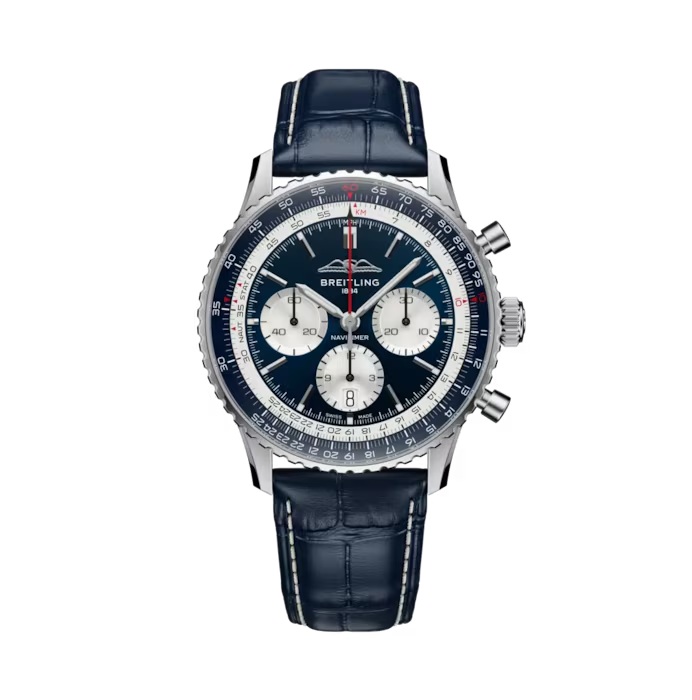
Featuring the Navitimer’s characteristic 43mm stainless steel case, the watch ticks along thanks to the 70-hour power reserve of the Breitling Manufacture Caliber B01 within, while a textured blue alligator leather strap pairs handsomely with its atmosphere-inspired dial and striking white chronograph sub-dials. The “pioneering spirit” of the Concorde deserves a timepiece worthy of its legendary accomplishments, and for $10,600, a luxurious nod to aviation and horological history can be yours via the new Breitling Navitimer B01 Chronograph.
‘A Sweetness From Nowhere’ Is an Experimental Hybrid About Transphobia, Healing and “Darkness as Nourishment” (Exclusive CPH:DOX Trailer)
Swedish artist Ester Bergsmark merges art forms, an approach for which she has developed a reputation: “This film is about the human pulse that keeps so many transgender people alive today.”
Wine Of The Week: Luca Beso de Dante
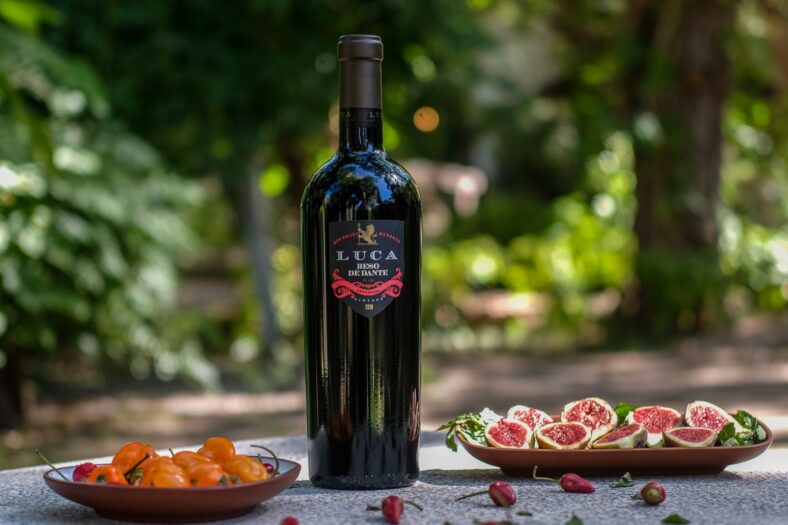
Old vines aren’t talked about enough in wine. Supposedly because it’s a little inside baseball—does the average wine drinker care about the age of a plant’s vines? Let’s break down why it matters. Put simply, the longer a vine survives, the less it produces, which isn’t a bad thing. Lower yields result to more concentration, depth, structure and complexity. The vines have had time to age into elegance, and become wise and poised. While the low yields is often a reason winemakers pull old vines out (less grapes mean less bottles), dedicated winemakers are leaning into old vines.
Dr. Laura Catena is one of them. The doctor-slash-winemaker founded Luca Winery with the intention of protecting the old vines in Mendoza’s Uco Valley. She works with a network of old growers who carefully preserve these prized vineyards and one sip proves it. Luca’s old vine Malbec captures the magic and history of Argentina’s enduring vineyards. Made from 50% Cabernet Sauvignon and a heaping of Merlot, the wine flirts between juicy boldness and structured, detailed tannins that plate well with the elegance of the cassis and oak. $65
Kate Dingwall is a sommelier and wine writer. Her work frequently appears in Wine Enthusiast, Decanter, Eater, Forbes.com, Vogue, and Food & Wine, and she pours wine at one of Canada’s top restaurants.