
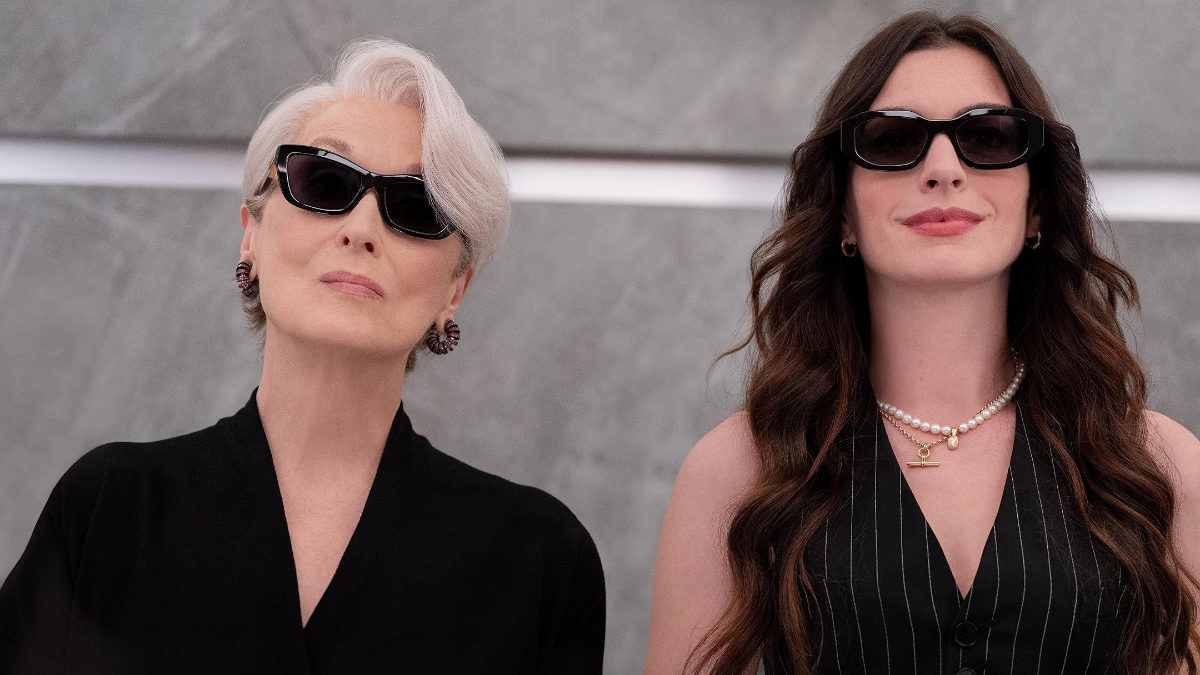
Almost 20 years after making their iconic turn as Miranda, Andy, Emily and Nigel—Meryl Streep, Anne Hathaway, Emily Blunt and Stanley Tucci return to the fashionable streets of New York City and the sleek offices of Runway Magazine in the eagerly awaited sequel to the 2006 (The Devil Wears Prada) phenomenon that defined a generation. The film reunites the original main cast with director David Frankel and writer Aline Brosh McKenna, and introduces an all-new runway of characters including Kenneth Branagh, Simone Ashley, Justin Theroux, Lucy Liu, Patrick Brammall, Caleb Hearon, Helen J Shen, Pauline Chalamet, B J Novak and Conrad Ricamora. Tracie Thoms and Tibor Feldman also reprise their roles as “Lily” and “Irv” from the first film.
For those who have returned to The Devil Wears Prada over the years, the film now plays less like a glossy workplace drama and more like a cultural artefact—one that captured how power, taste, and ambition functioned in a very specific, pre-digital moment. The trailer for The Devil Wears Prada 2 hints at a sequel that understands this shift instinctively. It does not appear eager to relive the past; instead, it seems intent on examining what remains when the world that once empowered its characters has fundamentally changed.
What stands out immediately is how Miranda Priestly (Meryl Streep) is framed. She is not softened, nor is she stripped of her authority. Yet the trailer surrounds her with a different kind of silence—one that feels less like fear and more like indifference. In cinematic terms, this is a far more unsettling threat. Miranda is no longer battling rivals or ambitious underlings; she appears to be contending with an industry that no longer waits for permission. The idea that her influence may be intact yet increasingly optional gives her character an unexpected existential weight, and it suggests that the film is interested in exploring power in decline rather than power abused.
Andy Sachs’ (Anne Hathaway) return is equally telling in its restraint. The trailer avoids positioning her as either triumphant or resentful. Instead, she comes across as composed, assured, and crucially, unimpressed. From a film buff’s perspective, this is a smart narrative move. Andy no longer needs to be the moral centre or the audience surrogate. She functions as a quiet counterpoint to Miranda—a living example that success can exist outside rigid hierarchies and fear-driven leadership. The tension between them seems rooted not in confrontation, but in what Andy’s very presence implies – that escape was possible, and perhaps even preferable.
Emily’s (Emily Blunt) role feels like the emotional connective tissue between the two worlds. If Andy walked away and Miranda remained immovable, Emily appears to have evolved within the system. Her arc, as hinted by the trailer, may carry the most unspoken conflict. She represents loyalty rewarded, ambition realised, and yet possibly a lingering question about the cost of staying. In narrative terms, she could become the character through whom the film examines compromise—not as failure, but as a conscious, if heavy, choice.
Interestingly, the trailer does not foreground fashion with the same exuberance as the original. The clothes are present, impeccably so, but they no longer dominate the frame. This tonal shift suggests that fashion, much like cinema itself, is being used more as metaphor than spectacle. The emphasis appears to be on conversations rather than catwalks, on glances rather than montages. It feels like a film less interested in aesthetic excess and more concerned with the mechanics of influence and relevance.
Ultimately, what the trailer hints at is a sequel that has matured alongside its audience. Where the first film questioned the personal cost of ambition, this one seems poised to interrogate legacy itself. What happens when authority is no longer feared, when taste is no longer dictated, and when those who once defined an era must confront a world that has learned to move without them? If The Devil Wears Prada 2 delivers on this promise, it may stand not just as a continuation, but as a reflective commentary on the very myth it helped create—an outcome far more compelling than nostalgia alone.