
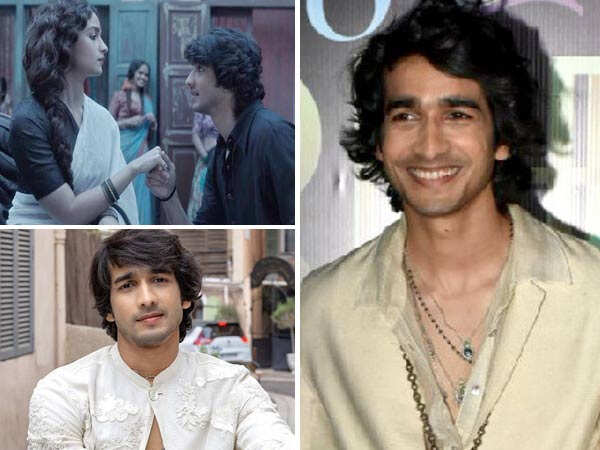
The film Gangubai Kathiawadi, starring Alia Bhatt and Shantanu Maheshwari saw a tender love story within its grand world. While Alia commanded the screen as Gangubai, it was Shantanu who quietly won hearts as Afsaan. In an exclusive chat with Filmfare, Shantanu looks back at his big-screen debut on the film’s four-year anniversary. He shares about working under Sanjay Leela Bhansali and what he learned from sharing screen space with Alia. From handling vulnerability on camera to understanding the nuances of his character, he opens up about the experience that shaped him as a rookie.
1. What’s the first memory that comes to mind when you think of your character Afsaan today?
The first feeling that comes to mind is immense gratitude, especially towards Sanjay (Leela Bhansali) sir for envisioning a character like Afsaan and trusting me with it. As an actor, especially at that stage of my journey, being given a role with such emotional depth was truly a gift. When I think of Afsaan, the word that stands out is innocence. Innocence in love. There was a purity in the way he loved Gangubai. No manipulation, no agenda, just a very honest and wholehearted emotion. That kind of love is rare and portraying it felt very special. He also taught me the power of subtleties. Afsaan wasn’t loud. He didn’t rely on heavy dialogue to express himself. A lot of his emotions lived in his eyes. Through him, I understood that sometimes you don’t need words to communicate what you are feeling a glance, a pause. A held breath can say much more.
2. Talk to me about the collaboration with Sanjay Leela Bhansali, especially as it marked your big-screen debut.
â� Working with Sanjay sir was like entering a different universe of cinema. His attention to detail is on another level. Every frame, every movement and every glance has intention. For a debut, it was intense, overwhelming and incredibly enriching. He pushes you to find honesty within grandeur. As an actor, you feel small in that world at first… and then you slowly grow into it. That experience shaped me deeply.
3. You shared screen space with Alia Bhatt. What did you learn from observing and working closely with her?
Alia is extremely instinctive. She comes prepared, but also leaves space for spontaneity. What I learned from her is emotional surrender. She doesn’t hold back when the camera rolls. There is no vanity and no hesitation. Her energy on set was warm and focused. She made the environment comfortable, especially for someone like me who was stepping into his first film. That generosity stays with you.
4. Could you tell me about a behind-the-scenes moment from the sets that still makes you smile?
Working with Sanjay sir was truly an experience. His one-liners are so witty. He has a sharp and spontaneous sense of humour. His sarcastic and funny in-between comments would often lighten the mood on set, even during intense moments. I shared a wonderful bond with our choreographer, Kruti (Mahesh) and her team. They became my go-to people on set. With them, everything felt lighter and more enjoyable. Much like an unsaid dance bond. We had a memorable time during the rehearsals of Meri Jaan, where things were constantly and spontaneously changing. Kruti and I had to quickly adapt and remember new steps on the spot, which was challenging but also exciting. The entire filming process was incredibly special to me. Whenever I look back at that journey, it instantly brings a smile to my face. It’s an experience I’ll always cherish.
5. How did you prepare yourself emotionally and technically for a period drama like this?
â� To be honest, I had largely surrendered myself to Sanjay sir’s vision and instructions. When you work with someone who sees every detail so clearly, you trust the process completely. That being said, there were a few conscious things I kept in mind. Body language today is very different from body language in a period setting. The posture, the way you hold yourself, your gaze and even the pace at which you move – everything had to feel rooted in that time. It could not feel casual or contemporary. Once I began to understand the world that Afsaan lived in the social context, the character slowly started making sense to me. And from there, it became less about acting and more about simply being him in that moment.
6. If you were to revisit Afsaan today, is there anything you would approach differently as an actor?
With experience, you always find new layers. Today, I might allow even more vulnerability in certain moments. At that time, I was discovering myself as a film actor. Now, I am more comfortable with silence, stillness and emotional risk. But I also respect the version of me who played him then. That innocence had its own truth.
7. What was the most challenging scene for you to shoot and why?
Honestly, I think all my scenes felt challenging. It was my debut and I was being directed by Sanjay sir. When you are in a situation like that, you naturally feel the responsibility to give more than hundred percent. Opportunities like that don’t come often and I was very aware of that. The only thing constantly on my mind was to deliver as much as I possibly could to what sir was envisioning. I did not want to fall short of that imagination. The song sequences were particularly challenging in a beautiful way. There are moments in the songs where you don’t have dialogues to lean on. It is just expression, presence and emotion. Those scenes really taught me that cinema often lives in the eyes, not in the words. For me, the challenge wasn’t just performing, it was rising to the moment.
Also Read: Shantanu Maheshwari’s emotional reveal on his parents’ reaction to his debut in Gangubai Kathiawadi