
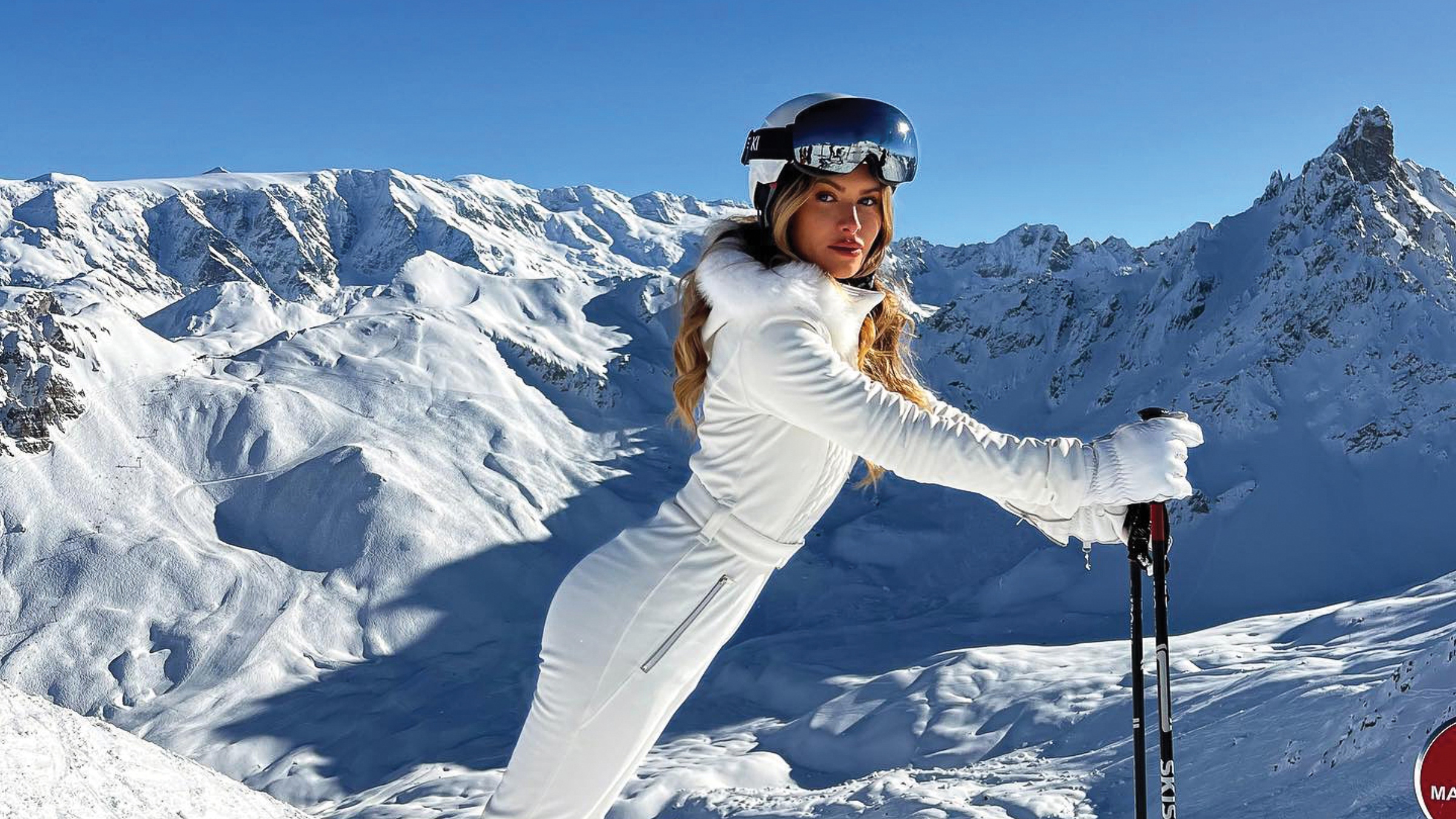

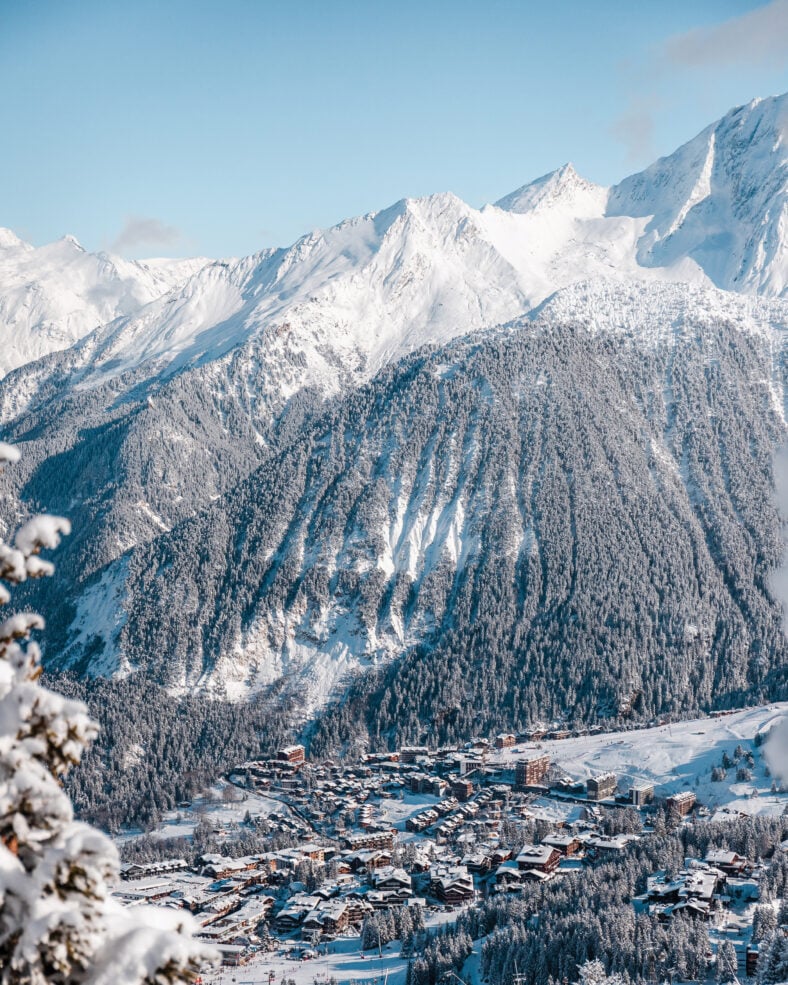
Steep money enjoys many sanctuaries—Zurich vaults, Cayman accounts, Mayfair clubs—but in Courchevel it straps on skis and masquerades as leisure. A syndicate with ski lifts. Beyond a storied ski destination, it’s a snowbound Versailles, a sky-high Valhalla where oligarchs launder their souls in Krug. Bellecôte is a Bond sequence spliced into snow: groomers comb the piste into corduroy so perfect it feels dubbed, danger artfully staged for tech billionaires emerging from Sölden-style glass cubes. No peril, all production value. An elaborate stage for the theater of wealth, palace hotels are manicured prisms of privilege, each mountain pass a runway for status. While Gaislachkogl boasts a Bond museum atop a 10,000-foot summit, Courchevel 1850 eschews cinematic installations for the living tableau.

leather, and lacquer combine into a private
weather system of pleasure; every surface
tells a story in fluent excess—glass panes
frame the Alps like stolen art (K2 Palace)
Aman Le Mélézin stands like an alpine specter of stealth luxury. Enigmatic architecture marries brooding stone and pale wood, extensive glazing frames slopes like abstract canvases, while lighting shivers between warmth and reserve. Within, 31 rooms fold into the mountain’s bones. Interiors unfold with similar restraint—bonsai trees placed like punctuation against alpine austerity. Alexandra Vesin, General Manager of the Aman Le Mélézin tells us, “We believe in creating a ‘home away from home’ for our guests and connecting them to the spirit of the destination. We do this through rigorous attention to detail and unparalleled levels of service.”
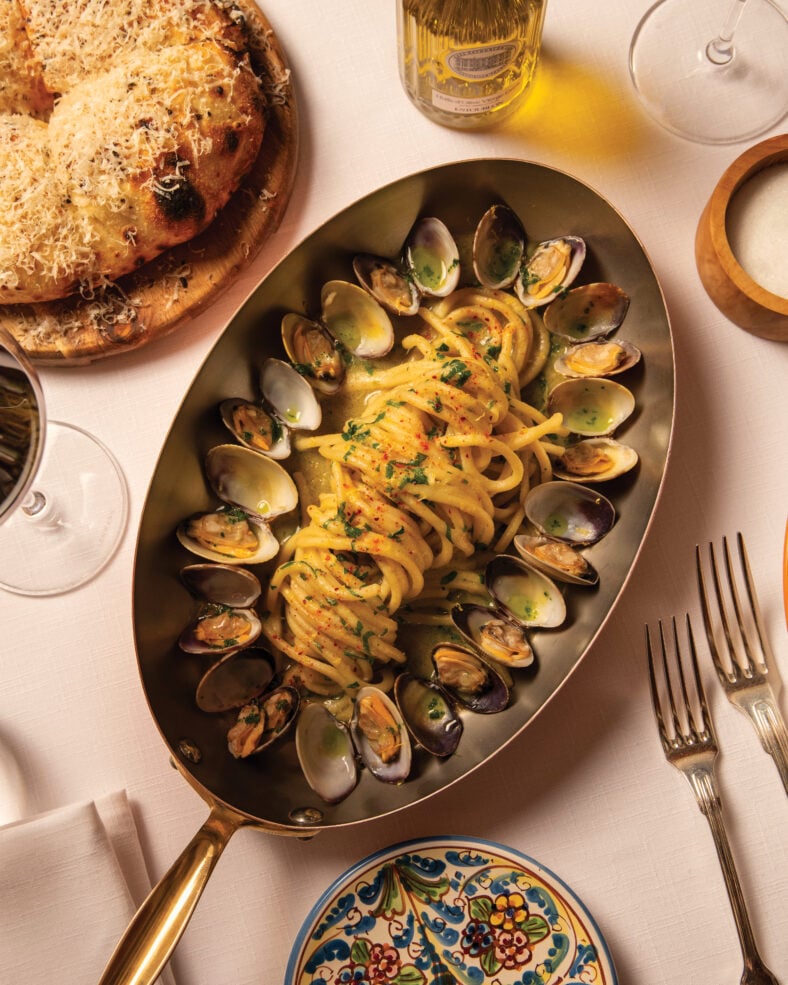
In-house at Nama, the Japanese restaurant, silence is part of the seasoning. Sashimi glistens like cut glass, Wagyu melts exquisitely on the tongue, miso cod bends memory as much as taste. “Altitude definitely affects taste. In the cold, thin mountain air, flavor perception changes, so we tend to season more boldly,” declares Daniele Codini, regional executive chef at EMEA, Aman. “While being mindful of over-seasoning, we introduce a selection of spices to elevate and balance. As for texture, the dry air impacts how guests experience food, so we adjust our recipes to include more moisture and creamy elements.” Nama’s mood is bifocal: Savoyard snow pressing against the windows, umami heat pressing against the palate. Sake lists wander into provenance and water source. Yet menus are elastic: the occasional request for French comfort—roast chicken, ratatouille—slips seamlessly into service.
A spa carved below ground boasts an aquamarine pool. Hammams release steam in slow procession, saunas breathe cedar. Therapists trace tired muscles with oils, coaxing warmth back into cold bones. Ultimately, Aman Le Mélézin sells a slender paradox: absolute opulence mediated by reticence. Contradictions are its texture—the occasional crack in the façade a reminder that even this fortress is subject to high winds, hail, and the human thread. In Courchevel, that is not a flaw—it is elegance’s margin.
weather system of pleasure; every surface tells a story in fluent excess—glass panes
frame the Alps like stolen art (K2 Palace)
Cheval Blanc Courchevel sits in the Jardin Alpin, reminding you of its parentage at every turn: a catharsis of luxury owned by LVMH. While Cheval Blanc is where old money haunts Le 1947, the resort’s three-Michelin-starred savoir-faire under Yannick Alléno, Les Airelles is where nostalgia wears ermine and roaring fires complement l’odeur du cognac. Prussian elegance pours itself into polished brass in this fairytale citadel, all turrets and tapestries, as if a Habsburg princess had been handed a bottomless expense account.
Within its walls, amber-varnished furniture gleams, stained glass windows catch twilight like relics. Rooms striving for castlescale can feel chapel-small from wood paneling so dense and unrelenting it borders on stifling. Dining is an alpine fever dream of velvet, gilt, and heraldry. Tables overflow with audacity—langoustines, oysters, truffle-flecked clouds of soufflé. You can also order regional tartiflette, if beneath the palace veneer lie more rustic, stubborn pleasures.

The Rolls-Royce fleet shines, though when snow deepens, even the Cullinan gives way to more practical transport. La cave des grands crus, cryotherapy—amenities abound. What’s more compelling is the discretion of arrival: your driver navigates tunnels so your face isn’t photographed; your favorite wine awaits pre-chilled.
Les Airelles doesn’t host—it anticipates. Les Airelles is not simply a monument to wealth—it’s a stage for ritual. In winter, when the light bruises early, it feels less like a hotel and more like an identity drawn in snow, fragile in its very perfection.
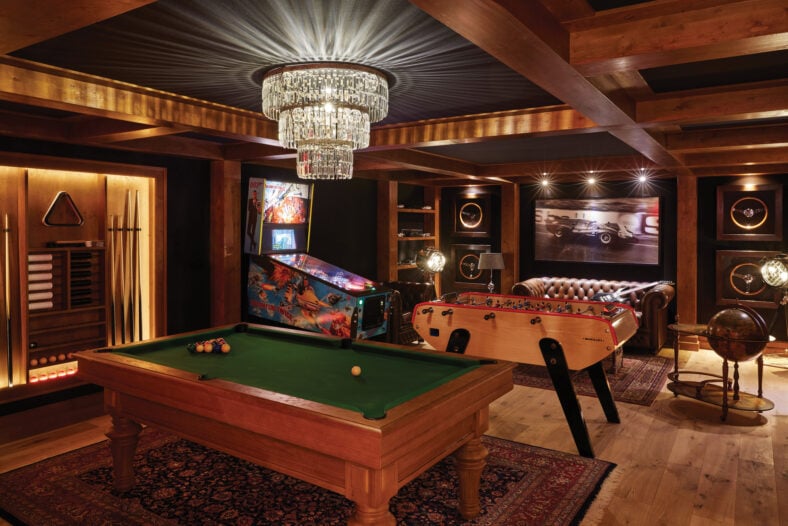
Le K2 Palace may as well be storyboarded by Eon Productions: immaculate, impenetrable, improbably perched. The 007 ski chase is alpha-masculinity incarnate—Lazenby fleeing Piz Gloria, Moore piste velocity as proof of courage. At K2, speed has been supplanted by liquidity. The chase is not measured in turns but in transfers. Fur coats playing supporting roles, wristwatches angling for closeups—here, even gravity feels like it’s on retainer.
Wealth itself becomes choreography: Step into a lobby that looks part Tibetan homage, part MI6 command center, and watch the rakish banter accelerate faster than any downhill. No Parahawks, just the elegant pursuit of acquisition disguised as leisure. At K2, the only high-speed pursuit is a tender offer made between the third pylon and lunch.

warmth without weight, adventure without
witness, and the kind of serendipity that
feels hand-finished (Eleven Experience)
True devotees of snow—those who chase gradients rather than wine lists—drive beyond Courchevel 36 miles northwest to Eleven Experience in Le Miroir, a hamlet whose name suggests reflection but delivers erasure. No gilded foyers, just two chalets stitched slylyinto a slope with discretion. Eleven Experience is the anti-palace favored by jet-setters who treat skiing not as décor but as liturgy. Where Aman sells silence and polish, Eleven traffics in risk and improvisation. The clientele is younger, sharper, and restless: venture capitalists, fintech magnates, and design disrupters.
The two chalets, Hibou (sleeps 16) and Pelerin (sleeps 12), are rustic in silhouette but forensic in design: stone walls, cedar beams, and terraces with seismically charged glacier views. What makes them magnetic isn’t comfort—though there are Viking-worthy saunas and hot tubs facing Mont Pourri, looming like a deity—but global positioning, engineered like a conjurer’s trick. From here, Eleven guides can unfurl entire cartographies of snow: Val d’Isère one morning, Sainte-Foy by lunch, La Rosière the next day, even La Thuile across the Italian border when fettuccine calls louder than fondue. Skiers here collect pistes like stamps, each descent another data point in their private adrenaline portfolio.

as exoskeletons for conquest; less retail than readiness—a dressing room for ambition (K2 Palace)
As heli-skiing in France is legally frowned upon, Eleven’s escape route is lateral: slip over the border into Valgrisenche, where rotors wait to lift clients into bowls that feel more like unfinished thoughts than terrain. Here, the snow writes in an unfamiliar hand—longer pauses, deeper cadence, each carve trailing off like an ellipsis.
Inside Eleven’s chalets, the choreography of care is precise and nearly invisible. Boots warmed to the degree between comfort and anticipation, weather maps studied with the intensity of scripture. By breakfast, three possible futures are laid out: polished resort laps, a skin track into the wild, or a helicopter hop to horizons that feel like hallucinations. When darkness corrals the valley, the curtain rises on dinner, bottles materializing as if conjured, desserts that taste like new dialects in caramel and smoke.
What Eleven sells is not luxury in the usual Courchevel lexicon. It’s the freedom to redraw borders, to slide between seven resorts in a week, to treat the Tarentaise Valley as a private chessboard. Eleven bottles that rarity, labels it with discretion, and pours it without fanfare. And yet, interruptions remain—the good kind. A whiteout that stuns a snowcat of sheikhs suddenly quiet; or a guide insisting the best snow is minutes left of where the map ends. Eleven’s genius is not perfection but volatility cured into narrative: uncertainty rendered consumable. In a valley obsessed with logos and lobbies, Le Miroir answers with routes, hut doors, and horizons that refuse to sit still.
This article originally appeared in Maxim’s Winter 2025 issue.