Warning: fopen(/home/sfzis46ex9jw/public_html/wp-content/uploads/index-7EcN60.tmp): Failed to open stream: Disk quota exceeded in /home/sfzis46ex9jw/public_html/wp-admin/includes/class-wp-filesystem-ftpext.php on line 190

Warning: unlink(/home/sfzis46ex9jw/public_html/wp-content/uploads/index-7EcN60.tmp): No such file or directory in /home/sfzis46ex9jw/public_html/wp-admin/includes/class-wp-filesystem-ftpext.php on line 193
Blog - Page 186 of 2204 - CelebVault.in
Home Blog Page 186

Hilary Duff Reveals Painful Truth About Sister Haylie in Emotional New Song

Singer and actress Hilary Duff has spoken openly about a deeply personal experience that inspired one of the songs on her latest album. The track, titled We Don’t Talk, reflects the emotional distance in her relationship with her older sister Haylie Duff. The song appears on Hilary Duff’s newly released album Luck… or Something, which marks her return to music after a long gap. Through the song and subsequent interviews, the artist has revealed how the strained relationship with her sister has affected her life in recent years.

During a conversation on the television program CBS Mornings with journalist Anthony Mason, Duff confirmed that the song directly addresses the separation between the two sisters. She described the situation as one of the most difficult emotional experiences she has faced. According to Duff, the absence of her sister from her life has created a sense of loneliness that she had not anticipated. She explained that the song represents a genuine reflection of her current reality rather than a dramatic or exaggerated portrayal of events.

Duff also admitted that deciding whether to include such a personal track on the album was not easy. She struggled with the idea of making a private family matter public through her music. However, she ultimately chose to keep the song because it truthfully expressed what she has been experiencing. The singer noted that many people go through similar situations in which relationships with close family members change or become distant over time. For Duff, sharing the song became a way of acknowledging that reality rather than hiding it.

The relationship between Hilary and Haylie Duff had long appeared to be close. The two sisters often appeared together in public events and interviews during the early years of Hilary’s career. Hilary Duff gained widespread recognition in the early 2000s through her starring role in the Disney Channel series Lizzie McGuire, which turned her into one of the network’s most recognisable young stars. During that time, Haylie Duff also built a career in entertainment, working as an actress, television host, and later a food blogger.

Despite their previously visible closeness, public interactions between the sisters have become increasingly rare in recent years. Observers have noted that they have not been photographed together since around 2019 and appear to have limited interaction on social media platforms. Neither Hilary nor Haylie has publicly explained the specific reason behind the distance in their relationship. However, the lyrics of We Don’t Talk suggest feelings of sadness, unresolved tension, and a desire for reconciliation.

In the song, Duff expresses frustration and longing for a conversation that could address the issues between them. Some lyrics hint at emotional misunderstandings and possible jealousy, though the singer has clarified that she is not trying to criticise her sister. Instead, she views the song as a personal account of her own feelings. Duff explained in interviews that she is unsure whether Haylie will listen to the track or how she might react to hearing it.

According to Duff, the process of writing and releasing the song required her to accept that certain parts of her life can no longer remain entirely private. She acknowledged that being a public figure often means that deeply personal experiences become topics of public discussion. For this reason, she decided it was better to express her perspective honestly rather than avoid the subject altogether. She emphasised that the song reflects only her own experience and is not meant as an attack or accusation.

The album Luck… or Something represents Duff’s sixth studio album and her first full musical project in nearly ten years. Beyond the song about her sister, the album also explores other aspects of her family life and personal history. One track, titled The Optimist, addresses her complicated relationship with her father, Robert Duff. Through these songs, Duff presents a collection of reflections on family, personal growth, and emotional challenges that have shaped her life during the years away from music.
 

Alka Yagnik and Ek Do Teen: The Making of a Playback Legend

In the crowded recording studios of Mumbai in the early 1990s, musicians often knew within seconds whether a song would work. Sometimes the arrangement was wrong. Sometimes the lyrics fell flat. And sometimes the singer simply didn’t connect with the melody. But when Alka Yagnik stepped into the recording booth, composers say something unusual happened. The room quieted. The musicians leaned forward. And the song began to breathe.

For nearly three decades, her voice became inseparable from the emotional landscape of Hindi cinema. It carried flirtation, heartbreak, longing, celebration, and nostalgia. It belonged to countless heroines on screen yet somehow remained unmistakably her own.

The journey to becoming Bollywood’s defining female voice of the 1990s, however, began far from the glamour of film studios.

Alka Yagnik was born into a Gujarati family in Kolkata, a city whose musical culture has shaped generations of classical performers. In her home, music was not an ambition. It was routine.

Her mother, Shubha Yagnik, was a respected classical vocalist who regularly performed on All India Radio. The young Alka often accompanied her to the station, quietly absorbing rehearsals and performances long before she fully understood what a professional music career meant.

By the age of six, she was already singing bhajans for radio broadcasts.

Producers at All India Radio began noticing something unusual. Even as a child, her pitch rarely wavered. Her voice carried a natural sweetness, but also a clarity and steadiness that many trained singers struggle to achieve.

Her mother recognized the potential early and introduced her to rigorous classical training. Mornings often began with long sessions of riyaaz before school, a discipline that slowly shaped the control and breath stability she would later be known for.

Then came the decision that would change everything.

When Alka was around ten years old, her mother travelled with her to Mumbai to explore the possibility of playback singing. Through industry contacts, they managed to arrange a meeting with legendary filmmaker Raj Kapoor.

Kapoor listened carefully as the young girl sang. He was impressed, but he was also honest. Her voice, he felt, was still too youthful for the heroines of Hindi cinema.

Rather than dismissing the possibility, he suggested they meet composers Laxmikant–Pyarelal and return once her voice matured.

The composers offered two choices. She could begin immediately as a child singer or wait until her voice developed into a playback voice suited for leading actresses.

Her mother chose patience.

Looking back, it was the decision that quietly set the stage for everything that followed.

Through the early 1980s, Alka took on smaller assignments and slowly familiarised herself with the workings of recording studios. Her early film work included songs for Payal Ki Jhankaar, but widespread recognition still felt distant.

Then came 1988.

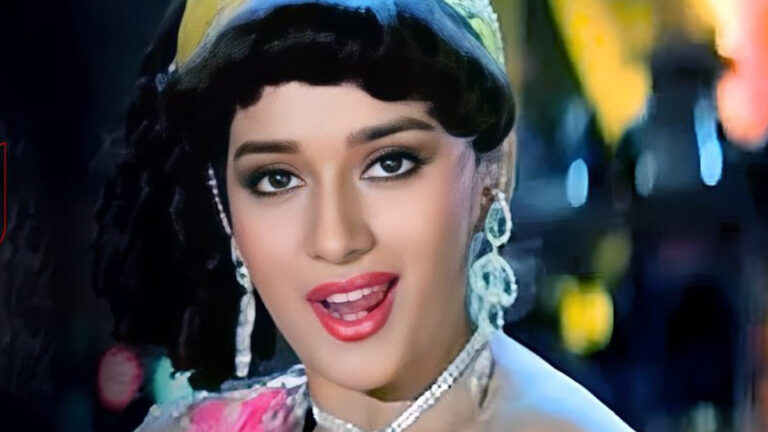
The film Tezaab needed a high-energy dance track for a rising star named Madhuri Dixit.

The song was Ek Do Teen.

During the recording session, musicians remember composer Laxmikant pushing the tempo repeatedly. The song demanded razor-sharp diction because every syllable had to match fast choreography.

After hours of recording, the final take burst with an infectious energy.

When the song released, it became a nationwide sensation. Madhuri Dixit’s electrifying performance and Alka Yagnik’s voice fused so seamlessly that audiences began associating the actress’s on-screen charisma with Yagnik’s singing.

The song earned Alka her first Filmfare Award for Best Female Playback Singer, but more importantly, it changed the trajectory of her career.

What followed was not just a run of hit songs, but the emergence of a voice capable of remarkable versatility.

Playback singing demands an unusual skill. The singer must disappear into the character on screen.

Few artists mastered that ability as naturally as Alka Yagnik.

Her voice could sound playful, romantic, mischievous, or deeply vulnerable depending on the actress she sang for. Composers often described this as emotional neutrality. She could reshape her tone to match the personality of the character rather than imposing her own identity on the song.

For Kajol, her voice carried youthful mischief. For Aishwarya Rai, it felt soft and graceful. For Preity Zinta, it sparkled with bright playfulness.

This adaptability helped define the romantic soundtracks of the 1990s.

Songs like the title track of Kuch Kuch Hota Hai and the lyrical Taal Se Taal Mila revealed a voice that could balance technical precision with emotional vulnerability.

Behind many of those iconic recordings are stories musicians still remember.

Playback legend Kumar Sanu once recalled arriving for a duet recording expecting several rehearsal takes. Alka listened quietly to the melody, studied the lyrics, and stepped into the booth.

She recorded her entire portion in a single take.

For sound engineers, this was hardly surprising. Years of classical training had given her extraordinary breath control and pitch stability.

Composer A. R. Rahman noticed another distinctive quality during the recording of Taal. Her first take often carried the most authentic emotional expression. Rahman began asking engineers to preserve early takes rather than assuming later versions would necessarily be better.

Then there was her enduring partnership with Udit Narayan, whose duets with Alka helped shape the romantic sound of an entire decade.

While recording the title track of Kuch Kuch Hota Hai, Alka suggested softening the opening line so the emotion would feel more tentative, reflecting the characters’ uncertainty. That small adjustment subtly altered the emotional tone of the song.

During the peak of Bollywood’s cassette era, the industry operated at a relentless pace. Playback singers often moved between studios throughout the day.

Musicians recall days when Alka Yagnik recorded multiple songs for different composers across Mumbai — a morning session in one studio, an afternoon duet in another, and a late evening recording for a dance track.

Despite the demanding schedule, she was known for quietly studying lyric sheets before every take, absorbing the emotional tone of the song before stepping into the booth.

Preparation allowed her to deliver performances that felt effortless even under intense time pressure.

Decades after the peak of her film career, Alka Yagnik unexpectedly returned to global headlines.

Streaming data in 2022 revealed that she had become one of the most streamed artists in the world, driven largely by the enduring popularity of 1990s Bollywood music.

Songs from films like Dilwale Dulhania Le Jayenge and Kuch Kuch Hota Hai continue to be played millions of times across streaming platforms.

For a singer who began her journey performing devotional songs on radio in Kolkata, the digital resurgence feels almost poetic.

Unlike many stars of her generation, Alka Yagnik rarely cultivated a public persona beyond the recording studio.

Her legacy lives where it always belonged: in the songs themselves.

For listeners who grew up through the 1990s and early 2000s, Bollywood romance often carries a particular sound. Warm, expressive, slightly playful, and unmistakably emotional.

More often than not, that sound belongs to Alka Yagnik.

Not because she tried to dominate the music, but because she understood something essential about playback singing: the audience must believe the emotion before they notice the voice.


Munawar Faruqui Opens Up About Teaching His Son a Tough Lesson on Respect

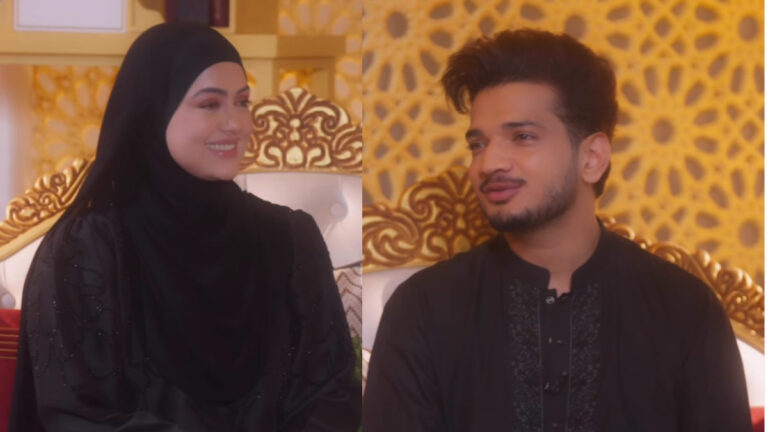
Comedian and reality show winner Munawar Faruqui recently spoke about a personal parenting moment that reflects the values he hopes to instil in his son. In a conversation with Sana Khan, Munawar shared an incident involving his young son Mikael that left a lasting impression on both of them. The comedian explained that while he tries to be a caring and understanding father, there are certain principles—especially respect for others—that he considers non-negotiable while raising his child.

Munawar recalled a situation in which he learned that Mikael had spoken rudely to a member of the household staff who looks after him. According to the comedian, the incident immediately caught his attention because he believes children should be taught to treat everyone equally regardless of their role or profession. Instead of reacting angrily in the moment, Munawar chose a different approach to make sure his son understood the seriousness of the behaviour. He said that when he heard about the incident, he decided to stop talking to Mikael temporarily and made it clear that their conversation would only continue after the child apologised to the person he had disrespected.

Explaining his reasoning, Munawar said that he wanted Mikael to recognise his mistake on his own rather than simply being scolded. By maintaining silence and setting a clear condition, he hoped his son would understand that respectful behaviour is expected from him at all times. Mikael eventually approached the staff member and apologised, something Munawar believes helped him realise the importance of treating people kindly. The comedian added that moments like these can become valuable life lessons for children when handled thoughtfully.

Munawar also emphasised that he consistently reminds his son that respect must come from within and should not depend on someone’s age, position, or social status. According to him, the foundation of good character lies in understanding that every individual deserves dignity. By encouraging his son to apologise directly, Munawar felt he was reinforcing the idea that accountability and humility are essential qualities that should be learned early in life.

The story also highlights the close relationship Munawar shares with his son. Mikael was born in 2018 to Munawar and his former partner Jasmine, whom he married in 2017. The couple later separated and finalised their divorce in 2022. Despite the changes in their personal lives, Munawar has often spoken openly about how important his son is to him and how fatherhood significantly changed his perspective on life. In various interviews and public appearances, he has mentioned that becoming a parent made him more responsible and motivated him to work harder.

Munawar’s affection for Mikael has also been evident during his appearances on reality shows such as Lock Upp and Bigg Boss 17, where he spoke emotionally about missing his son and striving to build a better future for him. Many viewers connected with these moments, which revealed a more personal side of the comedian beyond his stage persona. Reports have also suggested that Mikael spends significant time with Munawar, which has further strengthened the bond between father and son.

While Munawar continues to navigate his responsibilities as a parent, he is also actively pursuing his career in entertainment. Recently, he returned as the host of The Society Season 2, marking another step in his professional journey. In addition to hosting, he has hinted at several upcoming projects that he plans to announce in the near future.

Through anecdotes like the one he shared about Mikael, Munawar Faruqui often highlights how parenting experiences shape his outlook on life. For him, teaching his son the importance of kindness and respect is just as important as providing for him, and he believes that small everyday moments can play a significant role in shaping a child’s values and character.


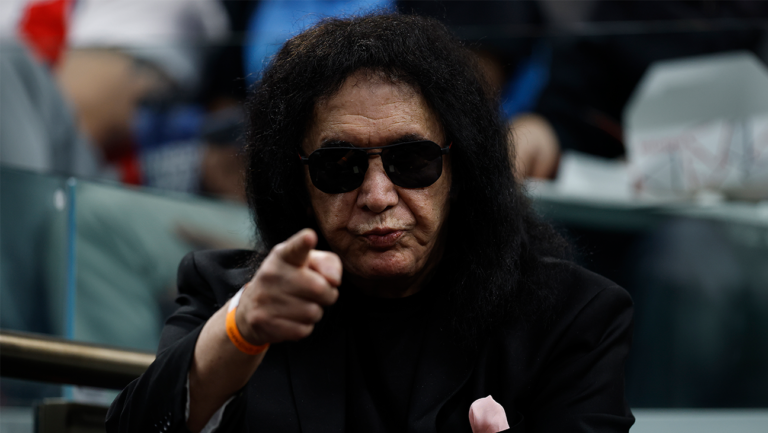
Gene Simmons Says Celebrities Should “Shut the F*** Up” About Politics

The KISS frontman specifically called out Mark Ruffalo, saying, “I don’t care” what the actor has to say about Trump or politics. 

Love Is Blind’s Christine & Vic Reveal They Were Supposed Go to Mexico

Love Is Blind Season 10 stars Cast Photos for St. John and Christine HamiltonFor Vic St. John and Christine Hamilton, love is truly blind—regardless of whether it’s in Malibu or Cabo.
After making waves for being the only couple from Love Is Blind season 10 to stay…
 

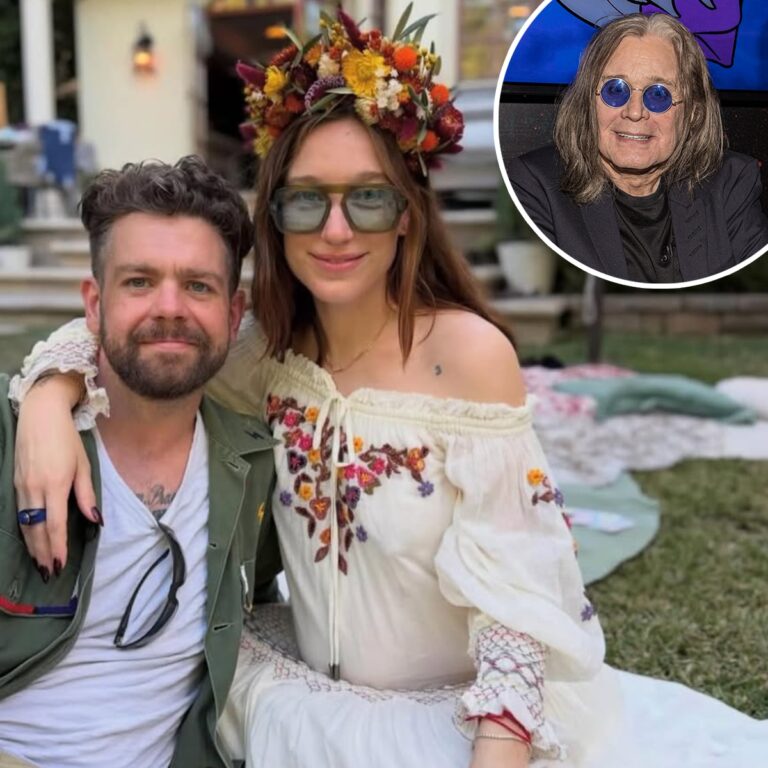
Jack Osbourne Welcomes Baby No. 5, Named After Dad Ozzy

Jack Osbourne, Aree Osbourne, Ozzy OsbourneOzzy Osbourne’s legacy lives on.
Seven months after the Black Sabbath frontman died at age 76 amid his battle with Parkinson’s disease, his and Sharon Osbourne’s son Jack Osbourne welcomed a baby…
 

Love Is Blind’s Devonta Reveals Truth About Meeting Pregnant Fiancée

Love Is Blind. Devonta AndersonAfter appearing on Love Is Blind, Devonta Anderson opened his eyes to a lady who’d been in his life all along.
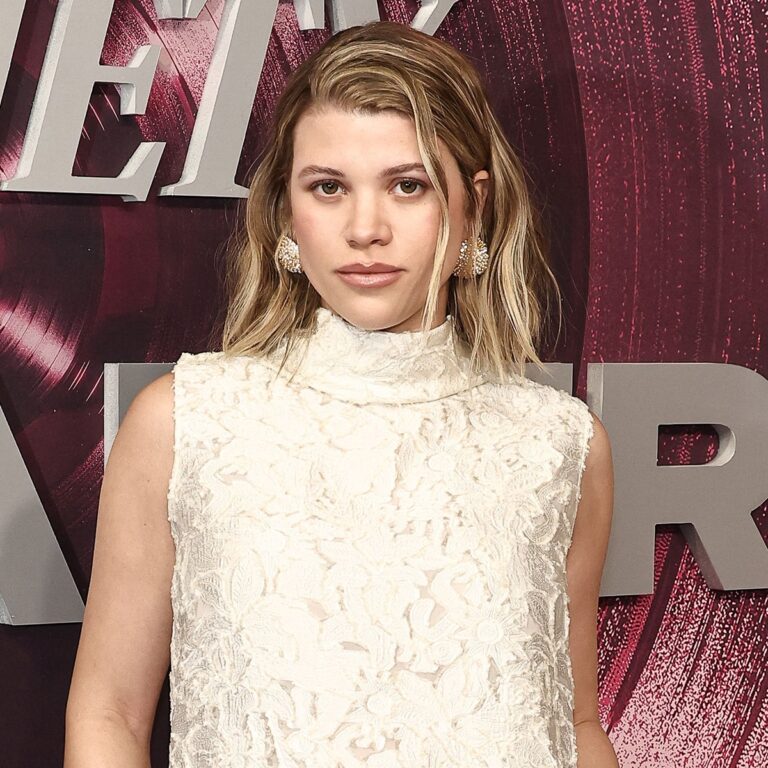
The reality star revealed during the season 10 reunion episode—out March 11—that he’s…
 

Pregnant Sofia Richie Unveils Hair Transformation Before Baby No. 2

Sofia RichieSofia Richie is bumping along with a new look.
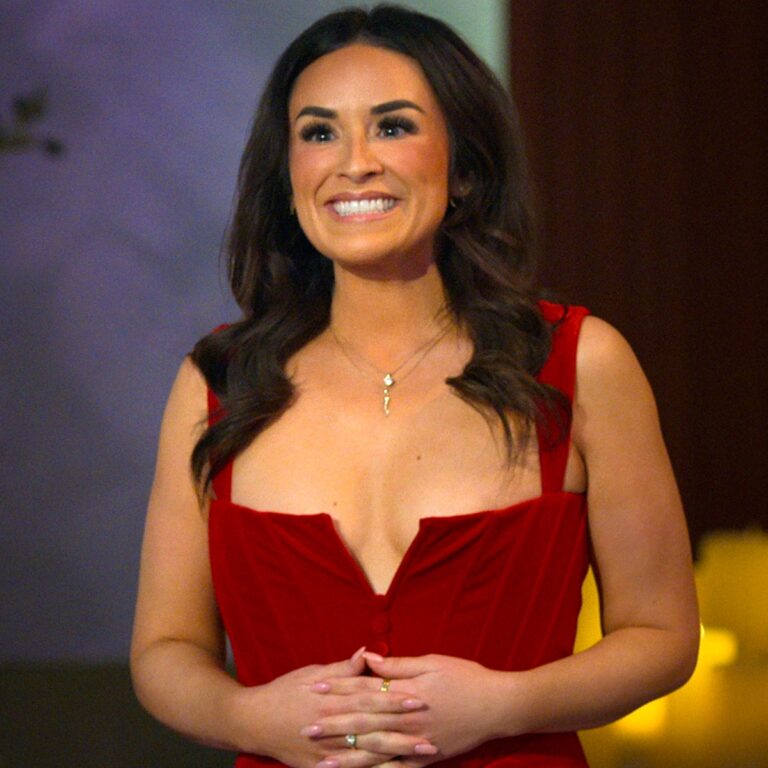
The pregnant model unveiled a darker ‘do as she prepares to welcome her second baby with husband Elliot Grainge.
Sharing selfies featuring her…
 

Love Is Blind Season 10’s Jess Is Dating This Costar After Chris Split

Love Is Blind. Jessica Barrett season 10It’s just what the doctor ordered for Jessica Barrett.

The Love Is Blind star revealed that she started dating another man from the pods after ending her engagement to season 10 costar Chris…
 

Security to Be Increased at 2026 Oscars Amid FBI Alert About Iran’s “Surprise Attack” Plan on California

“We want everybody to feel safe and protected and welcome, so it’s our job as a producing team to make sure that that translates,” Oscars telecast producer Raj Kapoor said.