
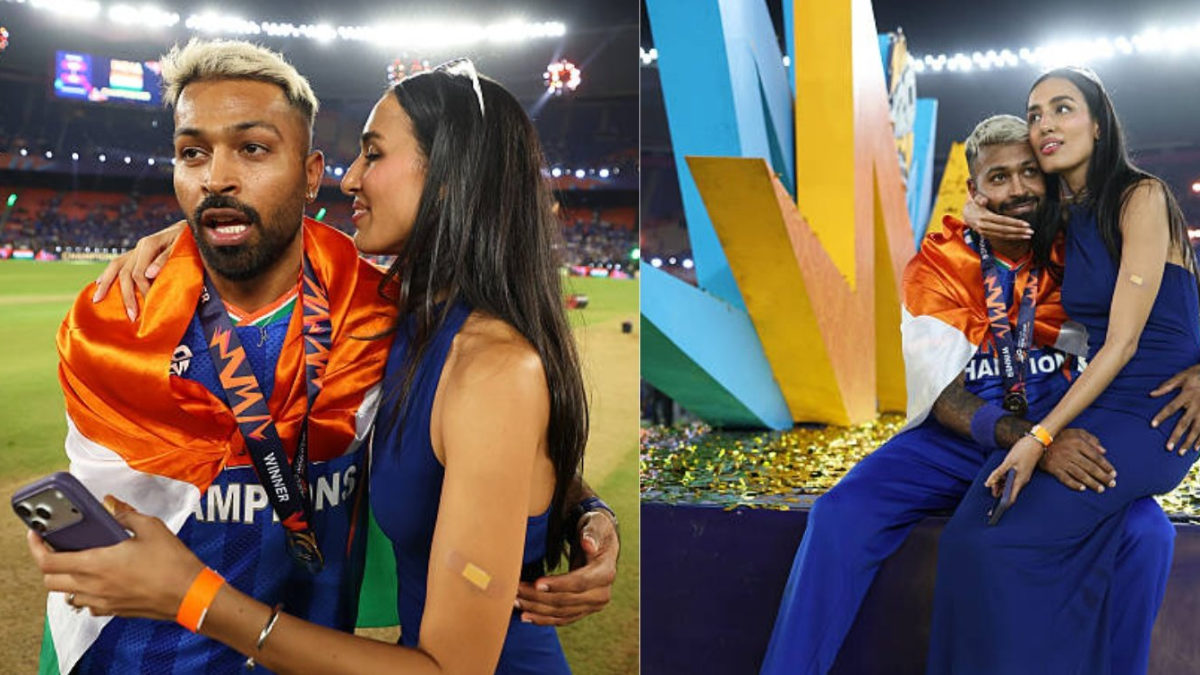
A legal complaint has been filed against Indian cricketer Hardik Pandya following celebrations after India’s victory over New Zealand national cricket team earlier this month. The complaint was lodged at the Shivajinagar Police Station by advocate Wajid Khan, who alleged that Pandya’s actions during the celebration amounted to disrespect toward the Indian national flag.
The incident in question took place after India national cricket team secured a 96-run victory over New Zealand on March 8 at Narendra Modi Stadium. Following the win, several Indian players were seen celebrating on the field with the national flag. According to the complaint, Pandya was seen draping the tricolour around his shoulders like a cape while participating in the post-match celebrations.
The advocate alleged that Pandya’s actions—including dancing with the flag and lying on the stage area while it was draped around him—constituted disrespect under the provisions of the Prevention of Insults to National Honour Act, 1971. The law outlines various actions considered insulting to the national flag, including misuse or deliberate acts that may be interpreted as showing disrespect.
According to the complaint, such behaviour during a public celebration could be viewed as inappropriate handling of the national symbol. The advocate urged authorities to examine whether the cricketer’s actions violated legal provisions designed to protect the dignity of the flag. However, the police have not yet initiated formal legal proceedings in the matter.
Officials at Shivajinagar Police Station confirmed that they have received the complaint and acknowledged its submission. At present, the matter is reportedly under preliminary review, and no First Information Report (FIR) has been registered. Police typically conduct an initial assessment of complaints before deciding whether the circumstances justify registering a formal case.
The issue has also prompted broader discussion about how the Indian national flag may be used during sporting celebrations. According to the Flag Code of India, individuals are allowed to display or drape the flag in certain contexts, including during national celebrations or sports victories, provided the flag is treated with respect and dignity.
Supporters of the cricketer argue that Pandya’s actions occurred in the context of a celebratory moment following an important victory for the national team. They contend that athletes often carry or wrap themselves in their national flag after international sporting triumphs as a symbolic expression of pride. In many global sporting events, it is common for players to display their national flags while celebrating on the field.
#WATCH | Pune: Advocate Wajid Khan says, “You must have seen the T20 World Cup here. Hardik Pandya was dancing with his girlfriend in celebration of his victory. The national flag was tied to his back… According to Section 2 of the 1971 National Flag Act, we should respect the… pic.twitter.com/mHVHn336ql
— ANI (@ANI) March 12, 2026
Others, however, believe that the guidelines governing the use of the flag should be strictly followed, even during celebrations. Those who share this view argue that national symbols should always be handled carefully to avoid situations that might appear disrespectful.
The debate surrounding the complaint has largely unfolded on social media platforms and news discussions, with users expressing differing opinions about whether the celebration crossed a line or whether the criticism itself is excessive. Some commentators have described the complaint as an example of over-interpretation of celebratory behaviour, while others maintain that the law exists to ensure the flag is treated with consistent respect.
The cricket match that sparked the controversy had drawn significant attention in its own right, as India’s decisive victory over New Zealand reinforced the team’s strong performance in the tournament. Post-match celebrations by players and fans are a common part of such high-profile sporting moments, particularly when national pride is involved.
For now, the complaint remains under review by the police, and it is unclear whether the authorities will proceed with a formal investigation. The outcome will likely depend on whether officials determine that the actions described in the complaint fall within the scope of the Prevention of Insults to National Honour Act, 1971 or whether they are considered acceptable within the context of sporting celebrations.
Until a decision is made, the incident continues to generate discussion about how national symbols should be used in public spaces, particularly during moments of celebration that attract widespread public attention.